
If you want your hunting dog to be more than just a pet, training is key. Imagine having a loyal companion who listens carefully, follows your commands, and helps you track game with confidence.
But how do you get there? Training hunting dogs takes patience, the right techniques, and a clear plan. In this guide, you’ll discover simple steps to turn your dog into a skilled hunting partner. Keep reading, and soon you’ll see your dog’s natural talents sharpened like never before.

Credit: www.gundogmag.com
Choosing The Right Breed
Choosing the right breed is key for training a successful hunting dog. Different breeds have unique traits that suit various hunting styles. Picking a breed that fits your hunting needs makes training easier and more effective.
Consider the dog’s energy level, intelligence, and natural instincts. Some breeds excel in retrieving, others in tracking or pointing. Matching these traits to your hunting goals ensures better performance.
Understanding Hunting Styles And Breed Traits
Each hunting style requires specific skills from a dog. For example, retrievers are great for waterfowl hunting. Pointers excel at locating game birds. Hounds are skilled trackers for larger game.
Knowing the breed’s natural abilities helps target training efforts. It also improves communication between you and your dog during hunts.
Popular Hunting Dog Breeds And Their Strengths
- Labrador Retriever:Friendly, energetic, and excellent at retrieving.
- Beagle:Small, with a strong sense of smell for tracking.
- German Shorthaired Pointer:Versatile, fast, and good at pointing and retrieving.
- English Springer Spaniel:Energetic and skilled in flushing game.
- Bloodhound:Powerful scent tracking for long-distance trailing.
Matching Breed Temperament To Your Lifestyle
Some hunting breeds need lots of exercise and mental stimulation. Others are calmer and adapt well to family life. Choose a breed that fits your daily routine and living space.
A well-matched temperament helps maintain training progress. It also builds a strong bond between you and your dog.
Essential Training Tools
Having the right tools can make a huge difference in training your hunting dog effectively. These essentials help you communicate clearly, keep your dog focused, and ensure safety during training sessions. Choosing the right equipment also boosts your confidence and your dog’s eagerness to learn.
Collars And Leashes
A sturdy collar is the foundation of your training gear. Opt for one that fits comfortably but securely to avoid any slipping during active hunts.
Leashes with adjustable lengths give you control while allowing your dog some freedom. I found that a 6-foot leash strikes a perfect balance between control and space for your dog to explore.
Reflective collars and leashes add visibility in low light, which is crucial during dawn or dusk training.
Training Whistles
A training whistle is invaluable for long-distance commands. It cuts through background noise and grabs your dog’s attention immediately.
Experiment with different whistle tones to see which your dog responds to best. Consistency in whistle signals is key to reinforcing commands.
Keep a spare whistle handy—you never know when one might get lost or damaged.
Retrieving Dummies And Bumpers
These tools simulate game and help your dog practice retrieval skills. They come in various sizes and materials, so choose one that suits your dog’s breed and strength.
Use dummies scented with natural animal scents to make training more realistic. This encourages your dog to track and retrieve as they would in the field.
Regularly inspect these items for wear and replace them to avoid accidental ingestion of torn pieces.
Treats And Rewards
High-value treats motivate your dog to focus and perform commands eagerly. Small, soft treats work best to avoid interrupting training flow.
Mix up the rewards to keep your dog interested—sometimes praise or a quick play session can be just as effective.
Remember to factor in treats when managing your dog’s daily calorie intake to keep them healthy.
Training Clickers
Clickers provide a clear, consistent sound to mark desired behaviors instantly. They help your dog understand exactly when they’ve done something right.
Pair the clicker with treats to build a strong positive association. Over time, your dog will respond to the click alone.
Don’t overuse the clicker; use it sparingly to maintain its effectiveness.
Basic Obedience Commands
Teaching basic obedience commands helps build a strong bond between you and your hunting dog. Commands like sit, stay, and come improve control and safety during hunts. Consistent practice makes your dog reliable and focused in the field.
Training hunting dogs requires a solid foundation in basic obedience commands. These commands are not just for the hunting field; they are essential for safety and control in everyday life. Mastering these basics creates a bond of trust and understanding between you and your dog, making hunting both effective and enjoyable.Sit And Stay
Teaching your dog to sit and stay is crucial. It sets the stage for more complex commands and helps manage your dog’s excitement levels. Start by holding a treat close to your dog’s nose, then move your hand up, allowing their bottom to naturally lower into a sitting position. Once seated, say “sit” and reward them. After mastering “sit,” introduce “stay.” With your dog in a sitting position, open your palm towards them and say “stay.” Gradually increase the distance and duration before returning to reward them. Consistency is key here.Recall
A reliable recall can prevent many potential mishaps during a hunt. Begin training in a distraction-free environment. Use a long leash to give your dog some freedom, then call their name followed by the command “come.” Reward immediately upon return, making it a positive experience. As they improve, introduce more distractions and increase the distance. Remember, your enthusiasm and rewards can make all the difference.Heel
Walking calmly by your side is vital for any hunting dog. To teach “heel,” hold a treat at your side to guide your dog into position. Walk a few steps, using the command “heel” to keep them in line. Praise and reward for staying in position. Gradually reduce treats as your dog learns to stay close without them. Consistent practice will ensure your dog remains attentive and controlled, even in exciting environments. Training hunting dogs requires patience and persistence. Have you found any unique challenges or successes with these basic commands? Share your experiences or any tips that worked for you!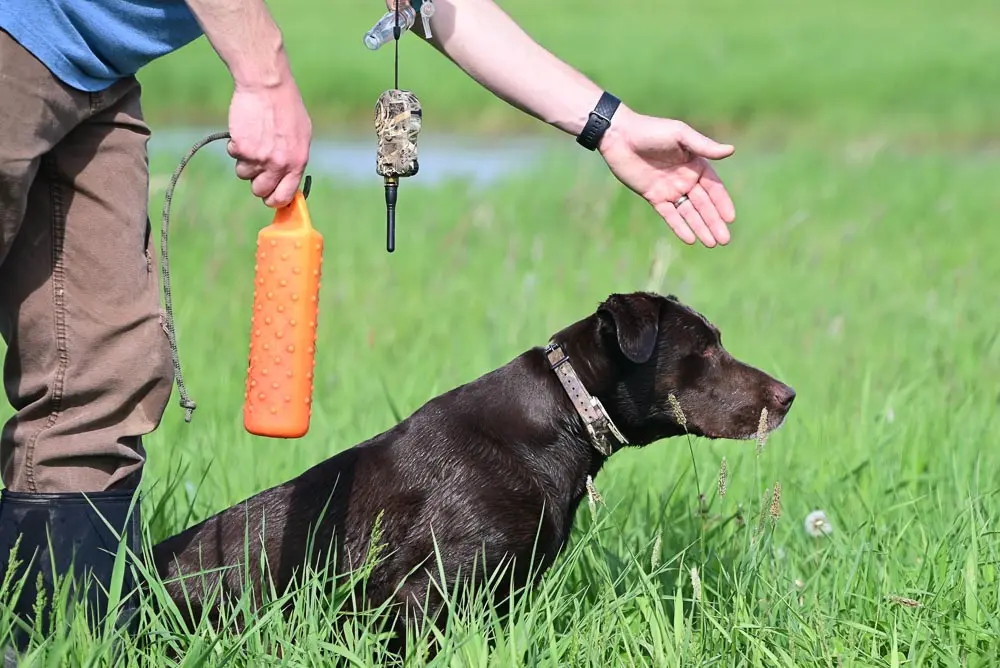
Credit: shootingsportsman.com
Introducing Scent Training
Scent training is a crucial part of teaching your hunting dog to excel in the field. Dogs naturally have an incredible sense of smell, but guiding that ability takes patience and clear techniques. Introducing scent work early helps your dog build confidence and focus on tracking scents effectively.
Have you ever noticed how your dog reacts to different smells during a walk? That curiosity is the foundation of scent training. Harnessing this natural interest can transform your dog into a reliable hunting partner.
Understanding Your Dog’s Nose
Your dog’s nose is a powerful tool, far beyond what humans can imagine. Each sniff gathers tons of information, helping your dog identify and follow trails. Recognizing how your dog processes scents allows you to tailor training sessions that keep them engaged and motivated.
Choosing The Right Scents To Start
Start with simple, familiar scents before moving on to game-specific odors. You might begin with a cloth rubbed on a bird or a small piece of fur. This helps your dog associate the scent with a reward and the tracking task ahead.
Creating A Scent Trail
Lay down a scent trail in a quiet area with minimal distractions. Drag the scent item along the ground, making sure the trail has turns and length to challenge your dog. Encourage your dog to follow the trail using positive reinforcement like treats or praise.
Using Positive Reinforcement
Every time your dog successfully follows a scent, reward them immediately. This could be with a favorite treat, a toy, or enthusiastic praise. Positive feedback makes your dog eager to repeat the behavior and improves learning speed.
Common Challenges And How To Overcome Them
- Distraction:If your dog loses focus, reduce distractions and keep training sessions short.
- Lack of interest:Try different scents or more exciting rewards to spark motivation.
- Frustration:Break tasks into smaller steps to avoid overwhelming your dog.
Teaching Tracking Skills
Teaching tracking skills to your hunting dog is essential for a successful hunting experience. This skill helps your dog follow scent trails accurately and efficiently, turning them into a reliable partner in the field. Training tracking requires patience, consistency, and clear communication.
Creating A Scent Trail
Start by laying a simple scent trail for your dog to follow. Use a strong-smelling item like a piece of cloth rubbed on game or anise oil.
Drag the item along a short path, then hide it at the end for your dog to find. This helps your dog understand the connection between the scent and the target.
Keep the trail short and straightforward at first, gradually making it longer and more complex as your dog improves.
Using Positive Reinforcement
Reward your dog immediately when they correctly follow the scent and find the target. Use treats, praise, or playtime to reinforce the behavior.
Consistent rewards motivate your dog to keep trying and improve their tracking skills.
Have you noticed how your dog’s excitement grows when they succeed? Use that energy to encourage longer and more challenging tracks.
Practicing In Different Environments
Take your training beyond the backyard. Practice tracking in various terrains like woods, fields, or even urban parks.
This variety exposes your dog to different scents and distractions, sharpening their focus and adaptability.
Changing environments also help you understand how your dog reacts to new challenges and adjust training accordingly.
Monitoring Your Dog’s Behavior
Pay attention to your dog’s body language during tracking exercises. Are they confident or hesitant? Do they lose the scent quickly?
Adjust the difficulty based on their responses. If your dog struggles, simplify the trail or offer more frequent rewards.
Tracking is a two-way process: your dog learns from you, and you learn what works best for your dog.
Building Endurance And Focus
Tracking can be tiring. Gradually increase the length and complexity of trails to build your dog’s stamina and concentration.
Short, frequent training sessions work better than long, exhausting ones. Keep your dog eager to learn, not worn out.
Have you tried mixing play with training? It keeps your dog’s mind sharp and makes learning fun.
Water Retrieval Techniques
Water retrieval training helps hunting dogs learn to find and bring back items from water. Teaching patience and using toys or dummies in shallow water builds confidence and skill. Repetition and praise encourage dogs to improve their water retrieval abilities.
Training hunting dogs requires patience and the right techniques, especially for tasks like water retrieval. This skill is crucial for hunting waterfowl, and teaching your dog to retrieve from water can be rewarding. It blends instinct with learned behavior and builds a strong bond between you and your dog.Start With Basic Commands
Before introducing water, ensure your dog is solid on basic commands like “sit,” “stay,” and “fetch.” These commands form the foundation for more complex tasks. Reinforce these commands regularly in various settings to build confidence.Introduce Water Gradually
Begin in shallow water to help your dog acclimate. Let them wade and play, ensuring they feel comfortable. Gradually increase the depth as your dog gains confidence and displays enthusiasm.Use A Floating Toy
Choose a bright, floating toy to pique your dog’s interest. Throw it a short distance into the water and encourage retrieval with excitement and praise. This method helps your dog associate water with fun and success.Reinforce With Positive Reinforcement
Celebrate every successful retrieval with treats and verbal praise. This positive reinforcement encourages repetition and builds your dog’s eagerness to please. Remember, consistency is key to mastering this skill.Practice In Different Water Environments
Vary the locations where you practice water retrieval. Different environments like ponds, lakes, and rivers offer unique challenges. This variety prepares your dog for real-world hunting scenarios.Monitor Your Dog’s Comfort And Safety
Keep an eye on your dog’s comfort level and never push them too hard. Safety is paramount, so always supervise water activities. Use a life vest if necessary, especially for beginners or small breeds. Training your hunting dog in water retrieval techniques is a journey filled with small victories. How will you celebrate your dog’s next achievement?Building Endurance And Stamina
Building endurance and stamina is essential for hunting dogs to perform well during long hunts. Without enough stamina, dogs may tire quickly, reducing their effectiveness and enjoyment. Training your dog to sustain energy over time will make a noticeable difference in their hunting performance.
Start With Short, Frequent Exercise Sessions
Begin by giving your dog short bursts of physical activity. Running or trotting for 5 to 10 minutes a few times a day helps build their cardiovascular strength without overworking them.
Gradually increase the length and intensity of these sessions. Are you noticing signs of fatigue or reluctance? That’s your cue to slow down and give your dog time to recover.
Use Varied Terrain To Challenge Your Dog
Walking or running on different surfaces like grass, dirt trails, or hills adds natural resistance. This variation helps your dog develop muscle strength and agility.
Try to include uphill climbs in your routine. Hills force your dog to work harder, improving stamina faster than flat terrain alone.
Incorporate Regular Rest And Recovery Days
Endurance isn’t just about constant training; rest is equally important. Your dog’s muscles need time to heal and grow stronger after exercise.
Schedule at least one or two rest days each week. How does your dog behave after rest? Often, you’ll see improved energy and eagerness to train again.
Monitor Diet And Hydration For Sustained Energy
A well-balanced diet fuels your dog’s endurance. Foods rich in protein and healthy fats provide long-lasting energy.
Keep fresh water available at all times, especially after exercise. Dehydration can quickly drain your dog’s stamina and affect recovery.
Use Play And Fetch To Keep Training Fun
Endurance training doesn’t have to feel like a chore. Games like fetch or tug-of-war add excitement while building stamina.
Engaging your dog in playful activities encourages longer sessions without boredom. Do you notice your dog running longer when the activity feels like play?
Socialization And Exposure
Socialization and exposure are key to shaping a confident and reliable hunting dog. These early experiences teach your dog how to react calmly to new people, animals, and environments. Without proper socialization, your dog may become fearful or distracted during hunts, which affects performance.
Introducing Your Dog To Different Environments
Take your dog to a variety of places, such as parks, woods, and even busy streets. This helps them get used to different sounds, smells, and sights. Start with calm spots before moving to more challenging environments to build their confidence gradually.
Meeting Other Dogs And People
Allow your dog to interact with different dogs and people regularly. Positive encounters help reduce anxiety and improve focus during hunts. Watch their body language closely and step in if interactions become too intense or stressful.
Exposure To Hunting Equipment And Sounds
Introduce your dog to hunting gear like guns, calls, and decoys early on. Let them sniff and explore these items in a non-threatening way. Play recordings of gunshots at low volume and increase gradually, so the sounds don’t startle them during actual hunts.
Handling Unexpected Situations
Expose your dog to sudden movements or noises like rustling leaves or splashing water. This prepares them to stay calm and focused during unpredictable moments in the field. Reward calm behavior to reinforce positive reactions.
Think about your dog’s reactions during early socialization. Are they curious or anxious? Adjust your approach to build trust and create a hunting partner who stays composed no matter the situation.
Handling Common Challenges
Training hunting dogs comes with its share of challenges. Handling these issues effectively can turn your dog into a reliable partner. Understanding and addressing common hurdles early helps build trust and sharpens your dog’s skills.
Distraction Control
Hunting environments are full of distractions—from scents to noises and movement. Your dog needs to learn how to stay focused despite these interruptions. Start with short training sessions in quiet areas, gradually adding distractions as your dog improves.
Use clear commands and rewarding praise when your dog ignores distractions and stays on task. If your dog breaks focus, gently redirect attention without punishment. Have you noticed which distractions pull your dog’s attention most? Target those first.
Fear And Anxiety
Fear can cripple your dog’s confidence in the field. Watch for signs like trembling, cowering, or avoidance. To build courage, introduce new experiences slowly and pair them with treats or play.
Consistency is key—repeat exposure helps your dog feel safe. Avoid forcing your dog into scary situations; instead, let them explore at their own pace. Have you ever seen your dog freeze during training? Patience and gentle encouragement often turn that fear into curiosity.
Aggression Management
Aggression can be dangerous during hunts and must be addressed promptly. Identify triggers such as competition over game or unfamiliar dogs. Use calm, firm commands to interrupt aggressive behavior immediately.
Socialize your dog regularly with other dogs and people to reduce fear-based aggression. If aggression persists, consult a professional trainer experienced in hunting dogs. What warning signs does your dog show before acting aggressively? Catching these early can prevent bigger problems.

Credit: www.youtube.com
Maintaining Motivation And Rewards
Keeping your hunting dog motivated is key to effective training. Motivation fuels their focus and eagerness to learn new commands. Rewards play a crucial role in reinforcing positive behavior and encouraging your dog to perform consistently.
Understanding What Drives Your Dog
Every dog has unique motivators. Some respond best to food treats, while others prefer toys or praise. Observe what excites your dog most during playtime or downtime.
Use that to tailor your reward system. Have you noticed your dog’s eyes light up for a specific toy or snack? That’s your starting point for motivation.
Balancing Rewards And Training Sessions
Too many treats can spoil your dog’s enthusiasm and health. Too few can make training feel like a chore. Find a balance where rewards are given consistently but not excessively.
Short, frequent sessions with immediate rewards work best. This keeps your dog’s interest sharp and prevents frustration on both sides.
Using Praise And Physical Affection
Words and touch can be just as rewarding as treats. A cheerful “good job!” or a gentle pat can boost your dog’s confidence. This emotional connection strengthens your bond and makes training enjoyable.
Try combining verbal praise with a favorite toy or treat for extra impact. Have you tried mixing affection with your rewards yet?
Introducing Variable Rewards To Sustain Interest
Giving the same reward every time can become predictable and boring. Instead, mix up the rewards occasionally. This keeps your dog guessing and eager to work.
- Switch between different treats
- Use playtime with a ball as a reward
- Offer extra cuddles or breaks
How do you think your dog would react if you changed up the rewards during training?
Recognizing Signs Of Declining Motivation
If your dog starts ignoring commands or seems distracted, motivation might be fading. Watch for yawns, wandering, or reluctance to engage. These are cues to adjust your approach.
Try shortening sessions or changing rewards to rekindle interest. What small change could you make today to re-energize your dog’s training?
Frequently Asked Questions
How Early Should You Start Training Hunting Dogs?
Start training hunting dogs as early as 8 weeks old. Early training builds strong habits and social skills. Consistent, positive reinforcement helps puppies learn commands and hunting basics effectively.
What Are The Best Commands For Hunting Dogs?
Essential commands include sit, stay, come, heel, and fetch. These commands ensure control and safety during hunts. Clear, consistent commands improve communication between handler and dog.
How Do You Train Dogs For Scent Tracking?
Introduce scent trails using game scents and short paths. Reward dogs for following trails accurately. Gradually increase trail length and complexity to build tracking skills.
How Often Should Hunting Dogs Train Each Week?
Train hunting dogs 3 to 5 times weekly for 20-30 minutes. Regular sessions maintain skills without causing fatigue. Consistency is key for progress and retention.
Conclusion
Training hunting dogs takes time, patience, and clear steps. Start with basic commands and build trust daily. Use rewards and short sessions to keep dogs focused. Practice in real outdoor settings to improve skills. Watch your dog’s progress and adjust training as needed.
Enjoy the process and celebrate small wins together. Good training creates a strong bond between you and your dog. Keep learning and stay consistent for best results. Your dog will become a reliable hunting partner with steady effort.